
What Happens During a Dynamic ADAS Calibration? A Step-by-Step Look
Imagine you’ve just had your windscreen replaced, the new glass is fitted, the damaged windscreen is gone and you’re ready to get back on the road. But wait, if your vehicle uses a camera-based Advanced Driver Assistance System (ADAS), there is still be one critical step to complete before you’re all systems go – Dynamic ADAS calibration.
Unlike static calibration, which uses specialist target boards inside a workshop or garage, some vehicles are designed to calibrate their cameras while being driven. During Bosch dynamic calibration, the vehicle’s camera observes real-world road markings and other features while specialist diagnostic software monitors and updates the vehicle’s system.
This step is of vital importance following windscreen replacement calibration, as the camera’s position can change when the windscreen is removed and replaced. Crucially, our specialists at Autoglass Ireland employ this Bosch diagnostic technology to initiate the required calibration process and ensure your car’s ADAS system is operating according to the stated manufacturer’s requirements.
Still wondering what exactly happens during a dynamic calibration? Well, let’s get into it…
What Happens During a Static ADAS Calibration? A Step-by-Step Look >>
Quick Summary: How Long Does an On-Road Dynamic Calibration Take and What is Involved?
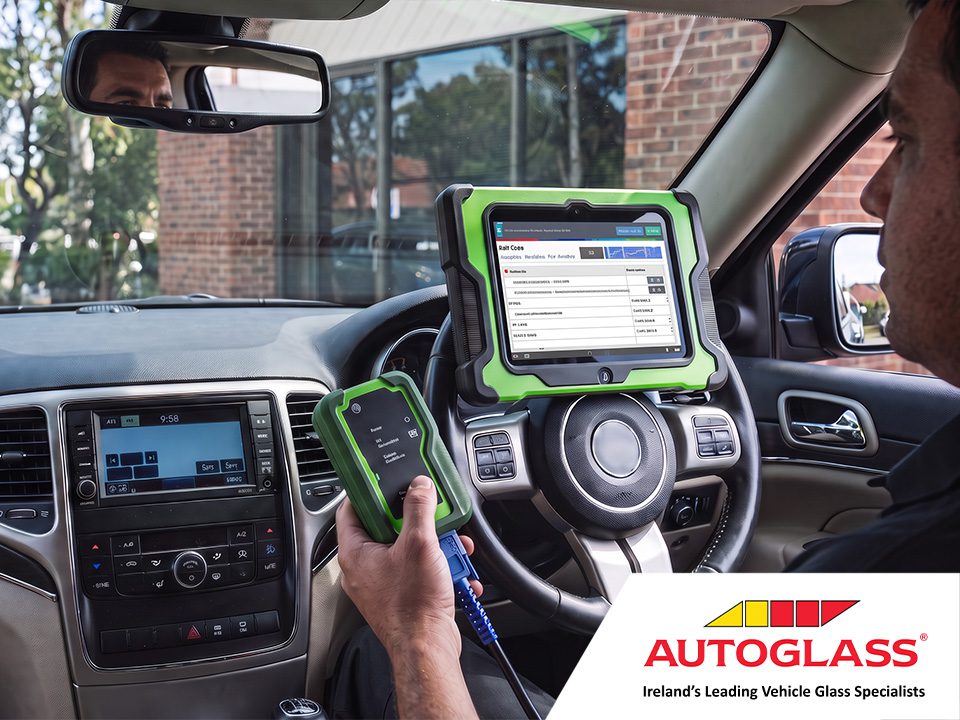
A dynamic calibration shouldn’t take any more than 30 to 45 minutes, although the exact time can vary depending on vehicle and road conditions. The main ADAS calibration steps involve a pre-drive health check, software initialisation, a controlled calibration drive and final digital validation. Using a portable Bosch diagnostic tool as part of the mobile ADAS setup, the technician monitors the vehicle while the Bosch camera learns from real-world road conditions.
Step 1: Pre-Drive Vehicle Prep and Digital Health Check
At Autoglass® Ireland, ADAS calibration is fully integrated into our windscreen replacement service and cannot be booked on its own. The process begins with immediate diagnostic and physical checks as soon as your car arrives. Preparing your vehicle before fitting the new glass ensures your safety systems are perfectly cleared for a successful installation.
Following the installation of the new windscreen, the technician needs to make sure it is physically and electronically ready for calibration.
This begins with basic vehicle preparation. Tyre pressures are checked because incorrect pressures can affect the vehicle’s ride height and handling characteristics. This is particularly important for calibration because the camera needs to be working from your car’s established geometric position. The technician may also check fluid levels and ensure that the vehicle isn’t carrying unusually heavy or uneven loads that could alter its normal stance.
The next stage is the electronic health check. The technician connects a portable Bosch diagnostic tool to the vehicle’s OBD system and carries out an ADAS pre-scan.
Using Bosch diagnostics, the technician can identify relevant fault codes or system warnings before the calibration begins. Any existing issue that could interfere with the process needs to be identified before the technician can begin the calibration drive.
All of this is done to establish a reliable starting point. Once your car is physically prepared, its tyre pressures are checked and its electronic systems are assessed before the camera begins the learning process in earnest.
Top 5 Signs Your Car’s ADAS Sensors Are Out of Alignment >>
Step 2: Initialising Calibration via the Bosch Software
Once the vehicle has passed its preliminary checks, the technician can initialise the calibration procedure.
The portable Bosch diagnostic tool communicates with the vehicle’s electronic control units through the OBD connection. The technician uses Bosch ESI software and the appropriate vehicle-specific diagnostic procedure to activate the required calibration mode.
This is the beginning of the digital dynamic calibration process. Rather than using a fixed calibration board inside a workshop, your car’s ADAS cameras are pre-prepared to collect specific information while the vehicle is being driven.
It is important to understand that this isn’t simply a case of pressing a reset button. The software identifies the particular vehicle and its relevant ADAS system, then establishes the conditions under which the calibration can take place.
The camera effectively needs to establish a new reference following the windscreen replacement. Its position relative to the vehicle has to be understood so that the electronic system can correctly interpret any hazards you may encounter on the road.
Once the calibration mode has been initiated, the system is ready to collect the information it needs to correctly recalibrate. The technician then takes the vehicle onto an appropriate road and begins the driving portion of the recalibration process.
The software continues monitoring the vehicle throughout this process, looking for the specific road features and driving conditions required to complete the calibration successfully.
From Horsepower to Software: How Cars Became Platforms >>
Step 3: The Calibration Drive & Real-World Line Tracking
This is the part of on-road vehicle calibration that separates dynamic calibration from its static counterpart.
The technician drives the vehicle under specific on-road driving parameters determined by the vehicle manufacturer’s requirements. This can involve, for example, a stretch of road with clear, visible lane markings and a relatively consistent speed. Depending on the vehicle, a suitable national road or motorway may provide the conditions needed for the process.
During the drive, your car’s forward-facing camera continuously analyses the vehicle’s surroundings. It looks for lane markings and other visual information that allow the vehicle’s computer to establish the camera’s geometric relationship with the road.
This is process is known as the “Camera sensor learning phase”. The vehicle is effectively collecting real-world information that allows its safety systems to establish calibrated reference points.
The exact driving requirements for this portion of the process vary car to car so there is no single speed or road type that applies to every calibration. The technician follows the manufacturer’s specified procedure rather than simply driving a predetermined route.
Weather can also play a role. Heavy rain, fog, glare or faded road markings can make it difficult for the camera to recognise the features it needs. If the required conditions aren’t available, the learning phase may take longer or need to be completed at another time.
The process continues until the vehicle’s system confirms that sufficient information has been collected and the calibration requirements have been met.
How Modern Car Safety Features Actually Work >>
Step 4: Post-Drive Validation & Digital Certification
Once the vehicle’s system indicates that calibration has been completed, the technician brings your car to a safe stop before carrying out the final checks.
The first priority is confirming that the relevant ADAS systems have accepted the calibration. The technician uses Bosch diagnostics to perform a post-calibration diagnostic scan and check for any remaining fault codes or system warnings.
This final diagnostic stage is an important part of the process. The technician needs to confirm that the vehicle’s electronic systems have registered the calibration correctly and that there are no outstanding faults that could affect the relevant safety functions.
The completed digital dynamic calibration can then be recorded as part of the vehicle’s service documentation. This gives you a clear record that the required calibration procedure has been completed following your car’s windscreen replacement.
Frequently Asked Questions About Dynamic ADAS Calibration
Q1: What makes a calibration “dynamic”?
Dynamic calibration takes place while the vehicle is moving. Instead of using fixed target boards inside a workshop, your car’s camera learns from real-world road features such as lane markings. Specialist mobile diagnostic equipment monitors the process.
Q2: Does my specific car need a static or dynamic setup?
The required method is determined by the vehicle manufacturer and its specific ADAS system. Some vehicles require dynamic calibration, while others use fixed targets or a combination of methods.
Q3: What happens if it’s pouring rain during my mobile appointment?
Heavy rain or fog can make road markings difficult for the camera to recognise. If weather conditions affect safety or calibration accuracy, the technician may need to postpone the drive or arrange calibration under suitable controlled conditions.
The Evolution of ADAS: A Look Back and Ahead >>
Complete Peace of Mind with Autoglass® Ireland’s Mobile ADAS Experts
A new windscreen is only part of the job when your vehicle relies on camera-based safety systems. Once the glass has been replaced, the camera will also need to be digitally realigned so that features such as lane assistance and emergency braking can continue operating as intended.
With specialist diagnostic equipment and trained technicians, Autoglass® Ireland can support the calibration requirements of modern vehicles, including systems that use dynamic, on-road calibration.
The advantage of a mobile service is convenience. Where your vehicle’s manufacturer permits dynamic calibration, the required diagnostic equipment can be brought directly to your home or workplace, reducing the need for an additional workshop visit.
If you need a windscreen replacement, check whether your vehicle requires ADAS calibration and ask about the appropriate procedure for your car today!
As ever, thanks for taking the time to check in with the Autoglass® Ireland Blog. We hope you found this piece enlightening and be sure to come back soon for more guides, tips and explainers on all things motoring. Safe Travels!
Book an appointment now
For a quick and easy way to make an appointment book online now.