
How Modern Car Safety Features Actually Work
Why Car Safety Technology Matters Today
In recent years , Irish motorists have experienced something of a quiet revolution as we have seen modern vehicles move from traditional safety systems to Advanced Driver Assistance Systems. These software-driven safety features utilise sensors, cameras, and powerful onboard computers to keep you and your passengers safe on the road.
With the help of these ADAS features, modern vehicles continuously gather data about speed, distance, steering, and your surroundings to help avoid incidents on the road. This guide aims to demystify how modern car safety technology actually works, so you can drive with confidence. If you’re wondering how modern car safety features work or what modern car safety features refers to, you’re in the right place. So, without any further ado, let’s get into it.
The Three Types of Car Safety Features: Passive, Active and Advanced
Passive Safety Features
Passive safety features are features which have been devised to protect you and your passengers in the event of a crash.
For example, modern seatbelts include pretensioners that tighten the belt in a crash and load limiters that allow a controlled amount of forward movement to reduce injury. Airbags come in front, side, curtain, and knee configurations to cushion occupants and lessen forces on the body during various crash scenarios. Crumple zones are engineered to deform and absorb impacts, slowing the car’s deceleration and protecting you and your passengers.
Active safety features
Active safety features help prevent accidents.
Think of how your Anti-lock Braking System, or ABS, prevents wheels from locking during braking, allowing you to retain more control. Electronic Stability Control, or ESC, detects when your car is skidding and applies individual brakes and sometimes even modifies power to your engine to stabilise your car. Traction Control Systems, or TCS (you may be sensing a theme here!), dampens wheel spin to help your car regain traction.
Advanced Driver Assistance Systems
Advanced Driver Assistance Systems, or ADAS, represent a broad family of features that assist the driver using onboard sensors and software.
A variety of ADAS features have become increasingly standard across most cars rolling off production lines. Modern ADAS features employ sensors, cameras, radar, and ultrasonic devices to name just a few. Each sensor type was devised with the intent of detecting different specific scenarios you may encounter on the road and together they contribute to a more complete safety net for you and your passengers.
ADAS features that will soon come as standard on all new vehicles >>
How Key Modern Car Safety Features Actually Work
What sets modern ADAS safety features apart is their capacity to work in tandem to maximise their effectiveness in keeping you safe on the roads.
Automatic Emergency Braking
Automatic Emergency Braking, or AEB, relies on forward-facing cameras and radar to measure your speed and track lane markings, traffic signs, and your proximity to other vehicles on the road. Typically, these systems initially alert drivers to potential hazards through audible or visual signals. If the driver does not respond, the system can automatically apply the brakes to reduce speed and mitigate any potential injury or damage to your car.
Lane Departure Warning and Lane Keeping Assist systems
Lane Departure Warning and Lane Keeping Assist systems employ two distinct approaches to try and ensure you keep to your own lane. Cameras detect lane markings and road edges, and if your car begins to drift without engaging the indicator, an alert will sound or appear on your dash. This is when Lane Keeping Assist comes in. Once engaged, Lane Keeping Assist can then gently steer your car back toward the centre of the lane.
Adaptive Cruise Control
Adaptive Cruise Control, or ACC, measures the distance between your car and the vehicle ahead using radar and camera data to maintain a safe following gap. ACC differs from traditional cruise control by dynamically adjusting speed to maintain a safe distance rather than holding a fixed speed. Many modern ACC systems can even bring your car to a complete stop and pull off once the way has cleared, even in stop-and-go traffic.
Blind Spot Monitoring
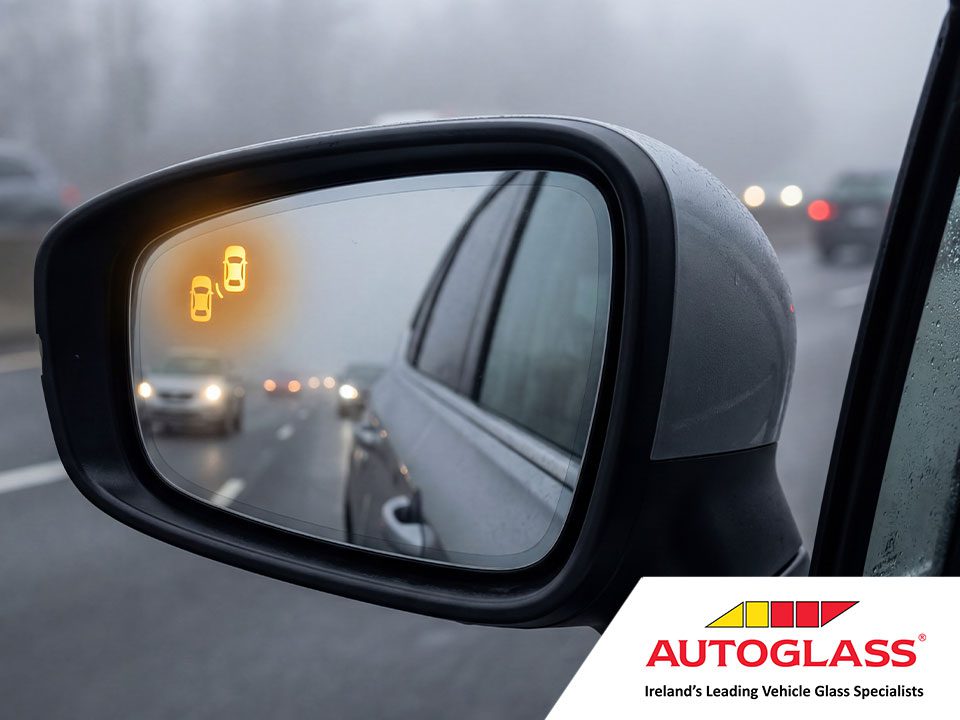
Blind Spot Monitoring uses sensors situated in the rear corners of your car to detect vehicles in the adjacent lanes. When a car moves into your blind spot, a warning indicator lights in the corresponding side mirror. Some systems offer audible alerts or a gentle steering assist if you indicate to change lanes when there is something in your blind spot.
Rear Cross-Traffic Alert
Rear Cross-Traffic Alert monitors your surroundings when you are reversing from a parking space. Side sensors detect approaching vehicles in adjacent lanes, and if a risk is identified, you are warned to stop or brake. This feature is particularly useful in busy carparks where you might not have a clear view of everything around you.
The Evolution of ADAS: A Look Back and Ahead >>
How Car Safety Sensors Work Together
All these systems rely on sensor fusion, which means the car combines data from multiple sensors to form a more reliable picture of the environment. For example, a camera might identify road markings, while radar confirms the distance to a vehicle ahead; together, they create a more robust assessment of how to react to any potential hazards. Redundancy also matters because if one sensor is obstructed or malfunctioning, others can compensate to keep safety features functional. Behind the scenes, onboard computers and software process the data from all your car’s cameras and sensors, run risk assessments, and decide whether to warn you, intervene, or both.
What Modern Car Safety Features Can’t Do
Bad weather makes driving more taxing no matter what and it is no different when you are talking about ADAS. Weather and visibility limitations can hamper sensor performance, so heavy rain, snow, fog, or even glare may reduce effectiveness. Sensor blockage is another risk associated with adverse weather; dirt, ice, or snow on sensors or cameras can seriously hamper their performance. Ultimately all the features outlined across this article are assistance systems, not self-driving technologies; you, as the driver, remain ultimately responsible for monitoring the road and taking control when required. Even ACC has it’s limitations and is by no means to be confused with full automation.
The Future of Car Safety Technology
Looking ahead, we can likely expect to see Driver Monitoring Systems becoming more common. These systems track movements and reaction times in drivers to ensure they are alert and attentive. Vehicle-to-Vehicle Communication, or V2V, could allow multiple cars on the road to share data in real time to reduce blind spots and coordinate safer maneuvers. Elsewhere, Predictive Crash Avoidance and advances in artificial intelligence stand to potentially change how hazards are detected and addressed by onboard computers.
What’s on the Horizon for ADAS in 2026? >>
Technology Helps—But the Driver Still Matters
Ultimately, it is important to never forget that ADAS technologies like the ones described in this article are powerful tools but responsibility still falls to the individual behind the wheel. Features like AEB, ACC, lane keeping, and blind-spot monitoring reduce risk and support you in the moment, but weather, sensor cleanliness, and driver attention remain crucial.
We hope that this post gave you a clearer understanding of how exactly these newfangled systems work, along with a sense of just what the future might hold in the world of vehicle safety and ADAS.
Check the Autoglass® Ireland Blog again soon for more motoring, explainers, guides, tips and deep dives. Safe travels!
Book an appointment now
For a quick and easy way to make an appointment book online now.